
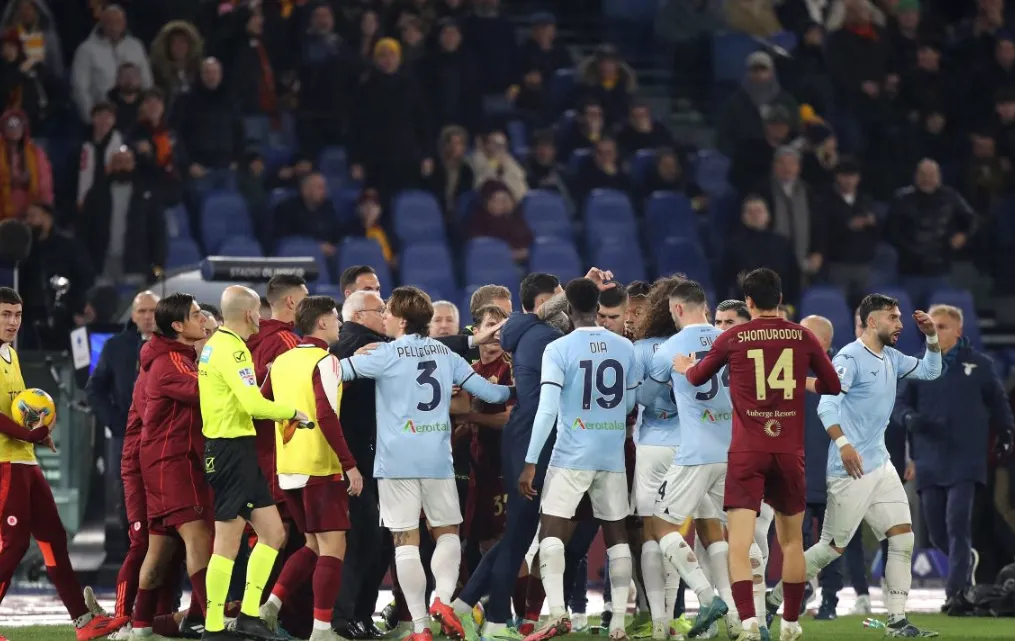
The heated rivalry between Lazio and Roma, two of Italian football’s most passionate fanbases, once again spilled onto the streets of the Eternal City. Recent reports from local authorities and news outlets confirm that violent clashes broke out between supporters ahead of the highly anticipated Derby della Capitale, prompting Rome’s mayor to describe the scenes as “urban warfare.” This incident has sent shockwaves through the Italian football community, raising serious questions about security and fan behavior in one of Europe’s most historic sporting events.
The derby, a fixture that divides the city down the middle, is always a powder keg of emotion. But this time, the pre-match atmosphere turned dangerously hostile, with skirmishes reported near the Stadio Olimpico and in the surrounding neighborhoods. As fans from both sides converged, police were forced to intervene to prevent the situation from escalating further.
The Build-Up to Chaos: A History of Rivalry
A Derby Like No Other
The Rome Derby, known locally as the Derby della Capitale, is more than just a football match; it’s a clash of identities, cultures, and social classes. Six6s follows this spectacle closely, understanding that while the passion is celebrated, it can also overflow into violence. This fixture has a long and troubled history of fan disturbances, with both the Ultras of Lazio and Roma known for their fierce loyalty and occasional aggression.
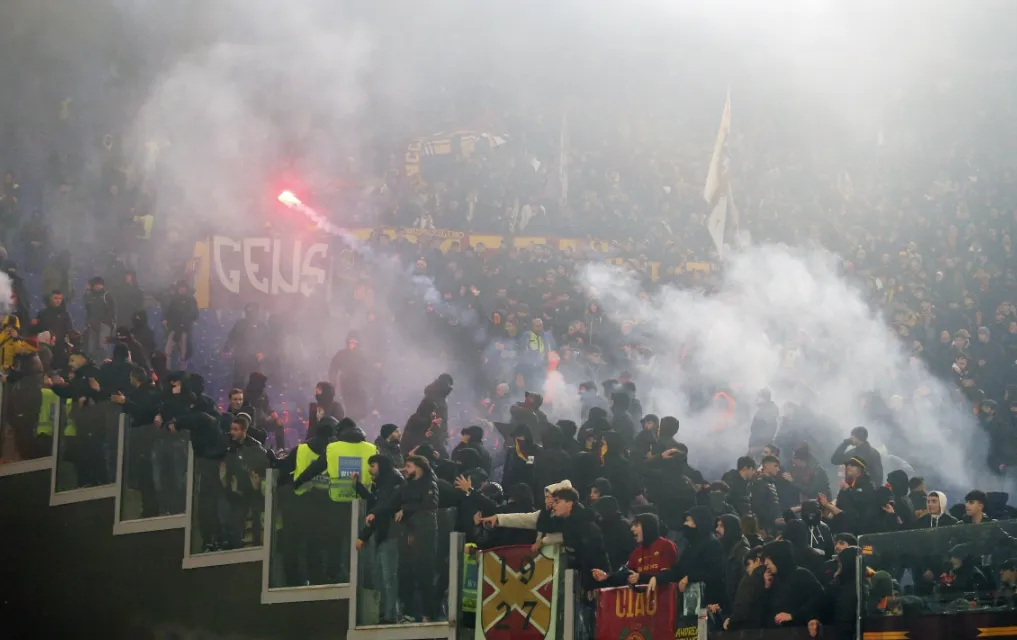
The anticipation for this particular match was immense, as both teams are competing for top positions in Serie A. The stakes were high, and the tension was palpable in the weeks leading up to the game. According to local law enforcement sources, specific intelligence had already flagged potential flashpoints, prompting a massive security operation.
The Moment of Eruption
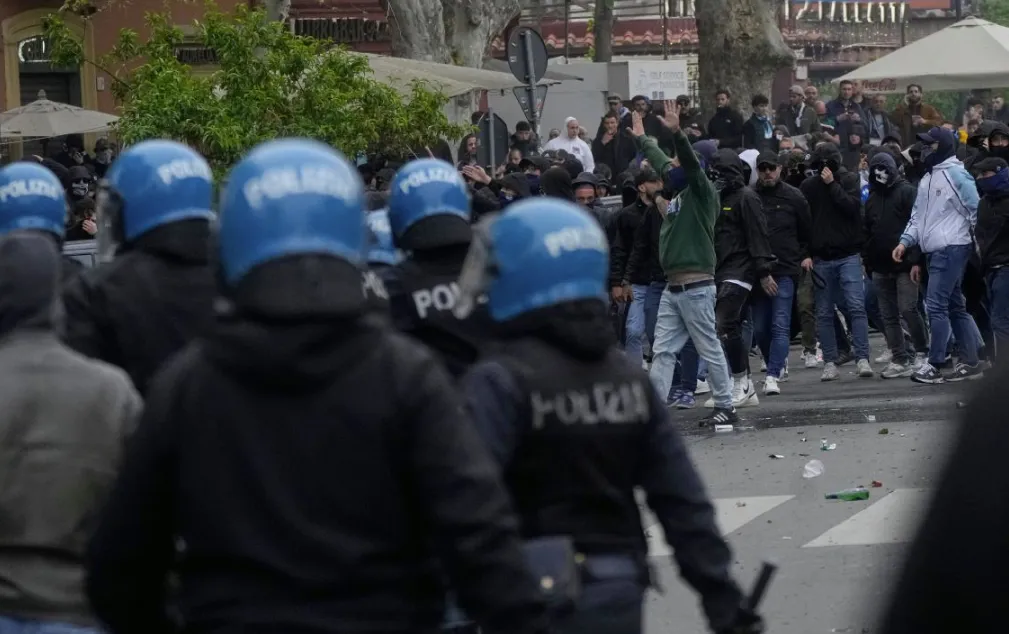
On the day of the match, groups of supporters from both sides began to gather early in the morning. By early afternoon, confrontations broke out near the Ponte Milvio bridge, a traditional gathering point for fans. Witnesses reported that flares, rocks, and even chairs were thrown between rival groups. The sound of firecrackers and smoke bombs filled the air, creating a war-like atmosphere.
One witness, a local store owner named Marco, told reporters, “I’ve lived here my whole life, but I’ve never seen it this bad. It was like a battle zone. People were running in all directions. The police were overwhelmed.” The chaos forced the authorities to close off several major roads, causing massive traffic jams across the city. Dozens of officers were dispatched to restore order, with reports indicating that several arrests were made.
Official Response and Condemnation
The Mayor’s Strong Words
Rome’s mayor, Roberto Gualtieri, was quick to react, issuing a statement that condemned the violence in the strongest possible terms. He referred to the incidents as “scenes of urban warfare” that are “unacceptable for a modern civil city like Rome.” He pledged that the authorities would take “the most severe measures” against those responsible, including long-term banning orders from stadiums.
The mayor also criticized the culture of violence that surrounds some football matches, calling for a concerted effort from clubs, fan groups, and educators to address the root causes. “This is not about football,” he emphasized. “This is about criminal behavior that uses football as an excuse.”
Club Statements and Sanctions
In response to the clashes, both Lazio and Roma issued official statements. Lazio’s management condemned the violence, stating they would cooperate with police to identify and ban any season ticket holders involved. Roma echoed this sentiment, adding that they would be reviewing their own safety protocols for future matches.
The Italian Football Federation (FIGC) is also expected to launch an investigation. Potential sanctions could include heavy fines for both clubs, partial stadium closures, or even the mandate to play future high-risk matches behind closed doors. The atmosphere inside the Stadio Olimpico itself was tense, but the match proceeded without major incident on the pitch.
Expert Analysis: The Deeper Issue
The “Ultras” Culture
To understand these events, one must look at the complex culture of Italian Ultras. These are not casual fans; they are highly organized groups that see themselves as the guardians of their club’s identity. Six6s’s experts note that while many Ultras create incredible tifos and atmospheres, a militant faction often views violence as a legitimate form of expression.
“This is a deeply embedded problem,” explains Dr. Anna Rossi, a sociologist specializing in football culture at the University of Rome. “The Ultras operate with their own codes of honor and territory. The derby is the ultimate test of those territories. The police are often caught in a cat-and-mouse game trying to predict where the next flashpoint will be.”
Can It Be Stopped?
There is ongoing debate about how to tackle this issue. Some advocate for high-tech surveillance and heavy police presence. Others call for a cultural shift, where clubs work more directly with fan groups to channel their passion constructively. However, as the recent events show, there is no simple solution.
“The problem is that the measures we try, like banning orders, only move the violence outside the stadium,” says former police commissioner and security consultant, Giancarlo Bellini. “These groups communicate through encrypted apps. They change meeting points at the last minute. It’s a constant challenge. We need better intelligence and faster response times.”
Looking Ahead: The Future of the Derby
The memory of this latest clash will linger for months. For true football fans in Rome, the derby is a sacred day, a celebration of their city’s culture and passion. The actions of a violent few threaten to tarnish that.
The clubs will be under immense pressure to ensure that the next meeting between Lazio and Roma does not result in the same level of public disorder. Investment in community programs, stricter internal discipline, and closer collaboration with law enforcement will be key.
As the dust settles, the silent majority of fans hope that the city can move forward. The football itself—the goals, the saves, the tactical battles—was lost in the narrative of violence. That is the tragedy. The beautiful game once again became a backdrop for something much uglier. The authorities and the clubs must now work together to ensure that the only battle fought in the Roman sun is the one on the pitch.
We invite you to share your thoughts on this incident. How do you think football authorities can better prevent fan violence? Leave a comment below and join the discussion. For more in-depth Six6s analysis of football’s biggest stories, continue exploring our site.
