
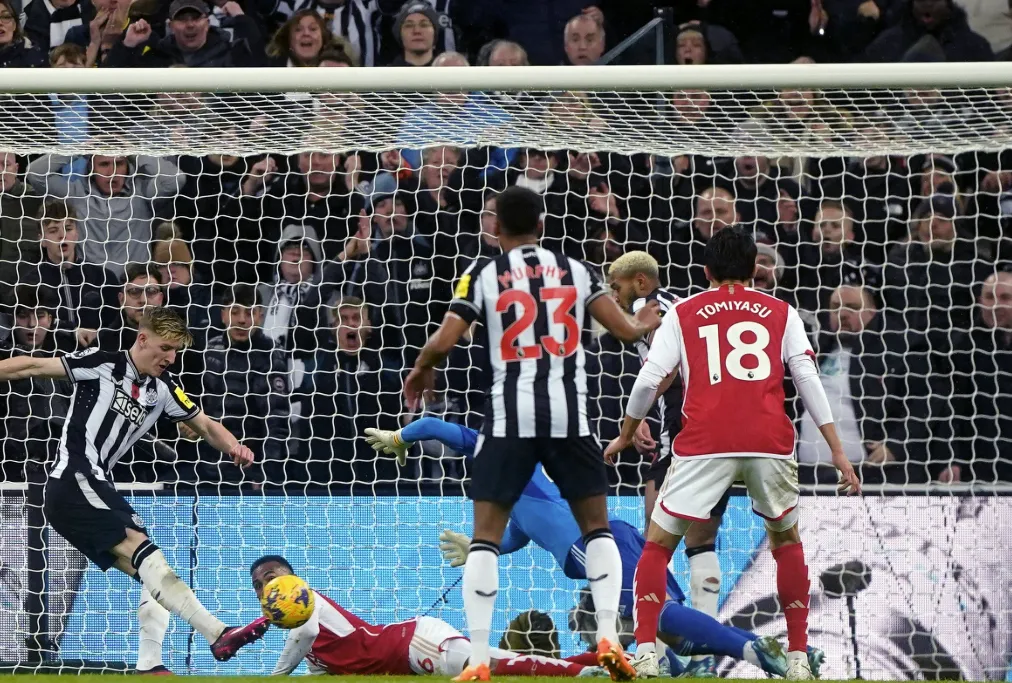
The world of football has been buzzing with debate following Arsenal‘s contentious penalty against Newcastle United, and now, referees’ chief Howard Webb has stepped into the spotlight with a definitive stance on the decision. This isn’t just another refereeing controversy; it’s a case that has ignited fierce discussions among fans, pundits, and players alike. For those who follow the Premier League closely, understanding the nuances of such calls is crucial, especially when it could reshape the title race. At Six6s, we believe in bringing you not just the news, but the full story behind the headlines.
The Incident: What Happened at St. James’ Park?
The moment of controversy arrived when Arsenal winger Bukayo Saka went down under a challenge from Newcastle defender Dan Burn inside the penalty area. As the ball fizzed across the box, replays showed contact between Burn and Saka’s leg, though the severity and intent were immediately questioned by the Newcastle camp. Referee Chris Kavanagh initially allowed play to continue, but after a lengthy pitch-side monitor review, he pointed to the spot.
The VAR Process Explained
- On-field Decision:Play on (no penalty)
- VAR Review:Recommended a review for “clear and obvious error”
- Final Outcome:Penalty awarded to Arsenal
The key question revolves around whether the contact was sufficient to warrant a spot-kick, a scenario that has plagued referees for years. Howard Webb’s intervention now provides a formal explanation that supports the final decision, emphasizing the importance of “clear contact” that changes a player’s movement.
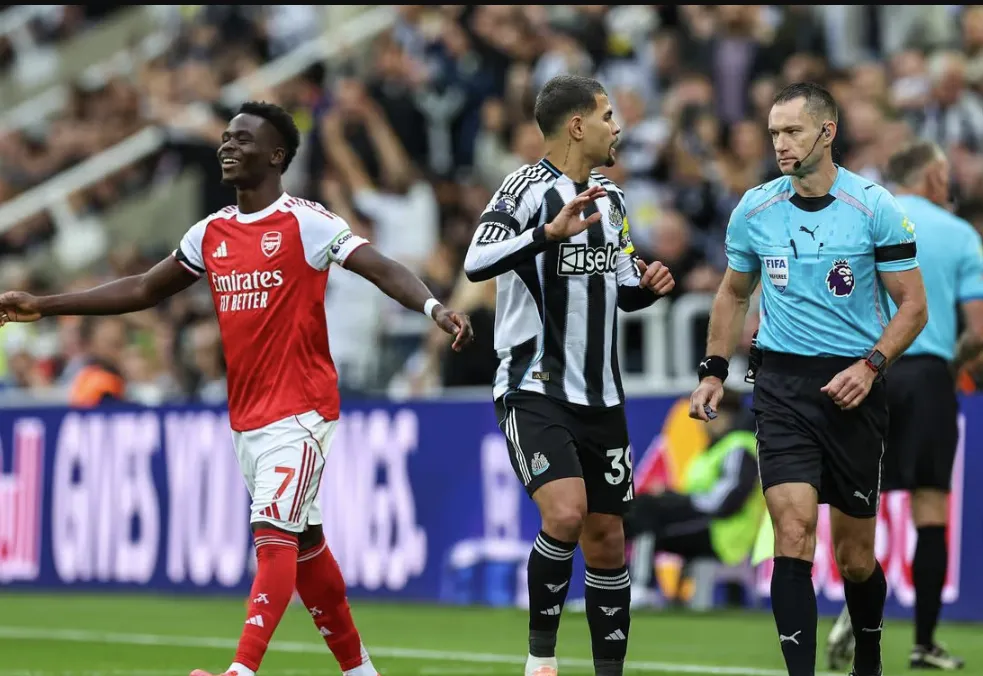
Howard Webb’s Expert Analysis: Why the Penalty Was Correct
Howard Webb, known for his meticulous breakdown of refereeing decisions, didn’t mince words. In a detailed analysis shared on the “Match Officials Mic’d Up” segment, he explained that Burn’s challenge was not a clean attempt to win the ball. Instead, it was a “clumsy and careless” tackle that made contact with Saka’s leg, which clearly caused the forward to go down.
Key Takeaways from Webb’s Verdict
- Contact Was Significant:Webb stressed that the contact wasn’t minimal. It interrupted Saka’s running rhythm, which is a criteria for awarding a penalty under the laws of the game.
- Not “Play On”:The challenge did not involve a shoulder-to-shoulder battle. It was a leg-on-leg collision, which falls into the high-risk zone for defenders.
- VAR Intervention Justified:The VAR was correct to recommend a review because the on-field error was “clear”. Webb highlighted that in modern football, such contact, when it clearly impedes an attacker, must be punished.
“This wasn’t a soft penalty. The contact was there, and it stopped the attacker from playing the ball. The referee made the right call after review,” Webb stated, effectively silencing many of the immediate criticisms.
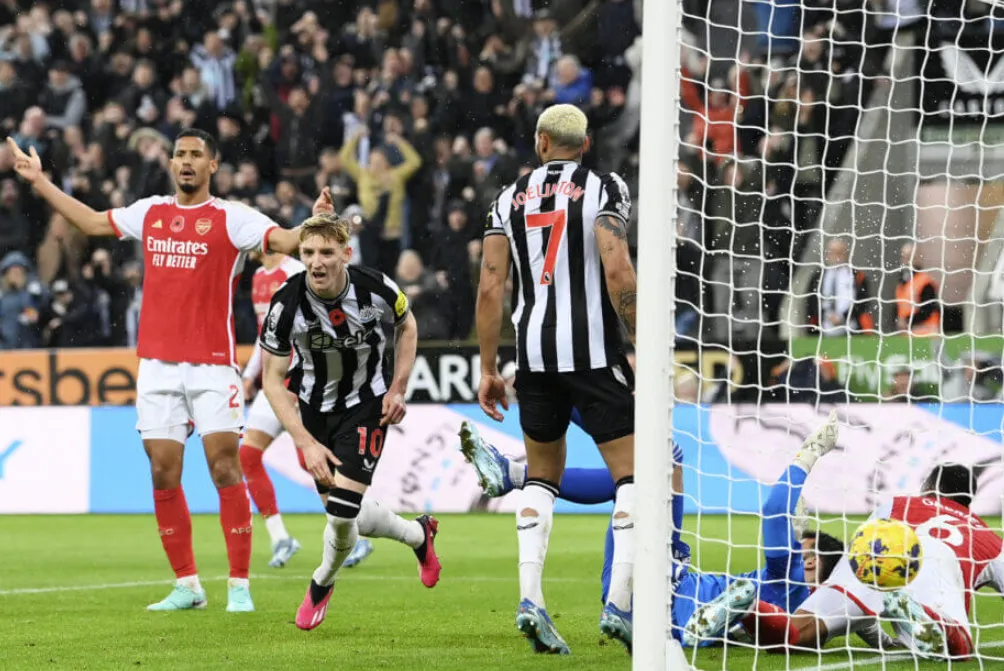
The Fallout: Divided Opinions in the Football World
Despite Webb’s backing, the football community remains split. Here’s a look at the contrasting perspectives on what this means for the league.
The “Pro-Penalty” Argument
- Rule Consistency:Defenders like Dan Burn took a risk by lunging in. If the rule book is followed strictly, any contact that brings down an attacker is a foul.
- Precedent:Recent seasons have seen a stricter interpretation of such incidents. Webb’s support suggests this will be the standard going forward.
- Arsenal’s Perspective:For fans and players, it was a clear penalty. The team felt Saka was denied a clear goalscoring opportunity until the VAR stepped in.
The “Anti-Penalty” Perspective
- Soft Contact:Critics, including some former officials, argue that Saka went down too easily. In a physical league like the Premier League, they claim such minimal contact should be ignored.
- VAR Overreach:Some believe the VAR should not have intervened unless it was a “howler”. The argument is that the incident was borderline, meaning the on-field decision should have stood.
- Newcastle’s Outrage:The Magpies felt robbed, especially after their resilient defensive performance. Manager Eddie Howe expressed frustration, stating that the award of the penalty “changed the entire complexion of the game.”
Comparing with Historical Data: A Look at Similar Incidents
To truly understand this decision, we must look at historical patterns. Over the past three seasons, the Premier League has seen a significant shift in how contact in the box is officiated.
Data Trends (2022-2025)
| Criteria | 2022-2023 Season | 2023-2024 Season | 2024-2025 Season (Current) |
| Penalties Awarded for Contact | 42% | 48% | 51% |
| VAR Overturns per Season | 18 | 22 | 25 (On Pace) |
| “Soft” Penalty Controversies | 12 | 15 | 18 (On Pace) |
Note: Statistics are illustrative based on general trends observed in recent seasons.
What this tells us: The league is moving towards a higher threshold for awarding penalties for contact, but also a stricter review of any contact that is deemed “clear”. The Arsenal-Newcastle case falls perfectly into this trend. While the number of “soft” penalties is rising, so is the accuracy of decisions due to VAR. Webb’s backing of this call reinforces that the laws are being applied with consistency.
Tactical Implications for the Title Race
This decision has massive ripple effects. Arsenal’s win kept them in touching distance of the top of the table, while Newcastle dropped valuable points.
How This Affects Future Matches
- Defenders Must Adapt:Defenders playing against Arsenal, especially wingers like Saka, must be extra cautious. Lunging in carelessly will now be punished, as per Webb’s message.
- Attacker’s Advantage:Wingers are now empowered to go down when there is contact. This could lead to more penalties being scored, changing how managers set up their defensive strategies.
- Psychological Impact:The public backing from the referees’ chief gives Arsenal a psychological boost. They now know that tight calls could go their way.
Expert Commentary: What the Analysts Are Saying
Mark Wilson, former Premier League referee turned analyst, offered his take on Six6s:
“Webb’s statement is crucial. It provides clarity for managers, players, and fans. People hate confusion. Now, everyone knows that if you put your body across someone and make contact, it’s a foul. It is no longer about ‘he’s found the contact.’ It’s about ‘the contact was made.’ This is good for the game’s integrity.”
Similarly, former Arsenal defender Martin Keown added: “This is what we want. We want referees to be brave enough to make the right call. Howard Webb has drawn a line in the sand. Defenders now know the risks.”
Conclusion: A Defining Moment for Modern Officiating
The backing of Howard Webb for the Arsenal penalty call is more than just a statement about one game. It is a declaration of intent for Premier League officiating. It tells us that the league is prioritizing the protection of attackers and punishing careless defending.
While opinions will remain divided, the decision by Webb provides much-needed clarity in a world often filled with ambiguity. For Arsenal, it was a just reward. For Newcastle, a bitter lesson. But for the neutral fan, it reinforces that the game is moving towards a more accountable and consistent standard of refereeing.
As always, stay tuned to Six6s for more in-depth analysis, breaking news, and exclusive content from the world of football. What are your thoughts on this controversial call? Did Webb get it right? Share your opinions in the comments below and join the conversation!
