
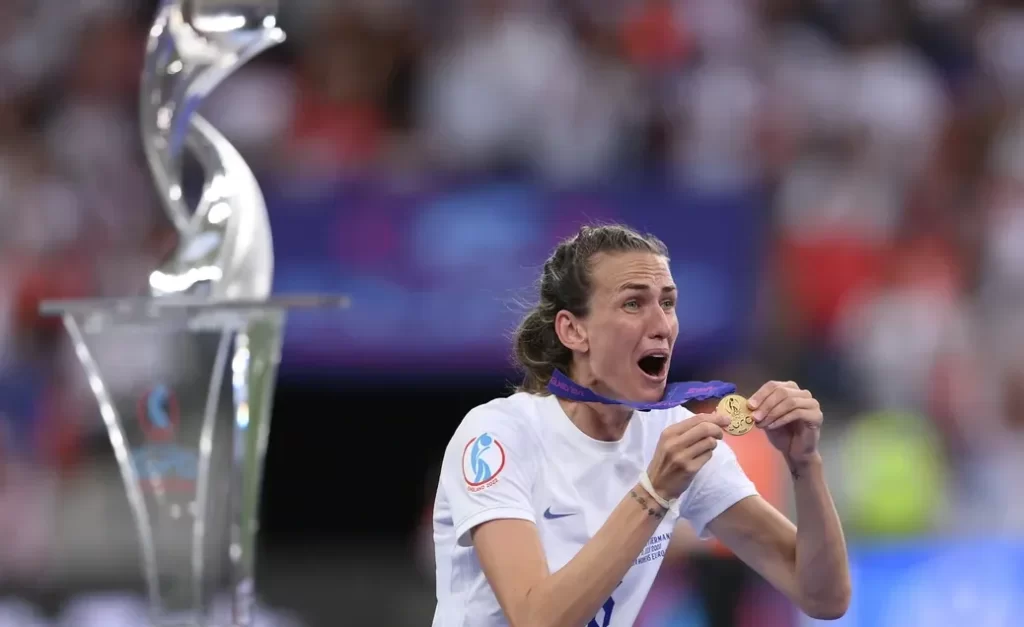
In a move that marks the end of a remarkable era for English women’s football, Jill Scott has officially announced her retirement from international football, bringing the curtain down on a glittering career that culminated in England’s historic European Championship triumph last summer. The 35-year-old midfielder, a mainstay of the Lionesses’ setup for nearly two decades, leaves behind a legacy that will be celebrated by fans and teammates alike. As reported by sources close to the squad, her final season was a storybook finish, filled with triumph and emotion. This decision, while expected by some, has nonetheless sparked a wave of tributes and nostalgia across the footballing world, especially among those who followed her journey from a promising young talent to a seasoned champion.
Who Was Jill Scott? A Look at the Lioness Icon
To truly understand the impact of Jill Scott‘s retirement, we need to go beyond the stats and look at the person behind the legend. Hailing from Sunderland, Scott’s journey with the England national team began in 2006 when she made her senior debut against the Netherlands. Known for her tireless engine, box-to-box runs, and an unshakeable, positive attitude, she became the backbone of the midfield for over a decade. Her nickname, “The Jills,” reflected her ability to both break up play and drive the team forward with attacking intent. Whether she was starting or coming off the bench—a role she perfected in her later years—her influence on the pitch was undeniable. She was not just a player; she was a symbol of resilience and dedication, representing England at six major tournaments, including the 2015 World Cup where they finished third.
Cause of Retirement: Ending on a High
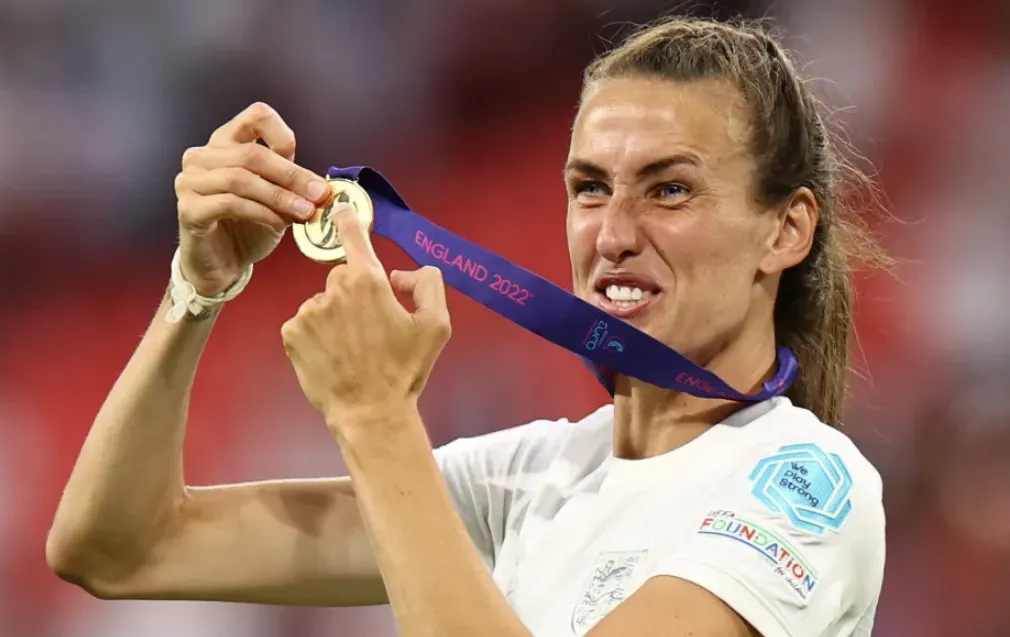
The cause of Scott’s retirement from international duty can be summed up in one phrase: a perfect ending. After playing a pivotal role in England’s Euro 2022 victory on home soil, the midfielder felt that the time was right to step away. In her own words, she had achieved everything she set out to do. Winning the European Championship at Wembley Stadium in front of a record crowd was the ultimate prize. She ended her international career having earned 161 caps and scoring 27 goals, a remarkable record for a midfielder. This decision was not born from a loss of form or injury, but from a desire to leave on the highest possible note, ensuring that her final memory in an England shirt is one of lifting a major trophy. It is a rare and admirable way to bow out, choosing the peak of success as her finishing line.
Timeline: From Debut to Wembley Glory
Jill Scott‘s international career spanned 16 years, filled with highs, lows, and unforgettable moments. Here is a timeline of the key milestones that defined her journey:
2006: The Debut – Scott makes her senior debut against the Netherlands, signaling the start of a long and illustrious career. She was still a young player learning her craft, but her potential was immediately obvious. Her physicality and technical skill set her apart from her peers.
2011 & 2013: Rising Through the Ranks – She featured prominently in the World Cup and Euros, helping England reach the quarter-finals of the 2011 World Cup and gaining invaluable experience. These tournaments were crucial for her development as a world-class midfielder. She became known for her consistency and her ability to read the game.
2015: World Cup Bronze – A highlight of her career came when England defeated Germany to claim third place at the 2015 FIFA Women’s World Cup in Canada. This was a major breakthrough for the women’s game in England, and Scott was a vital part of that success. The bronze medal was a testament to the team’s growth.
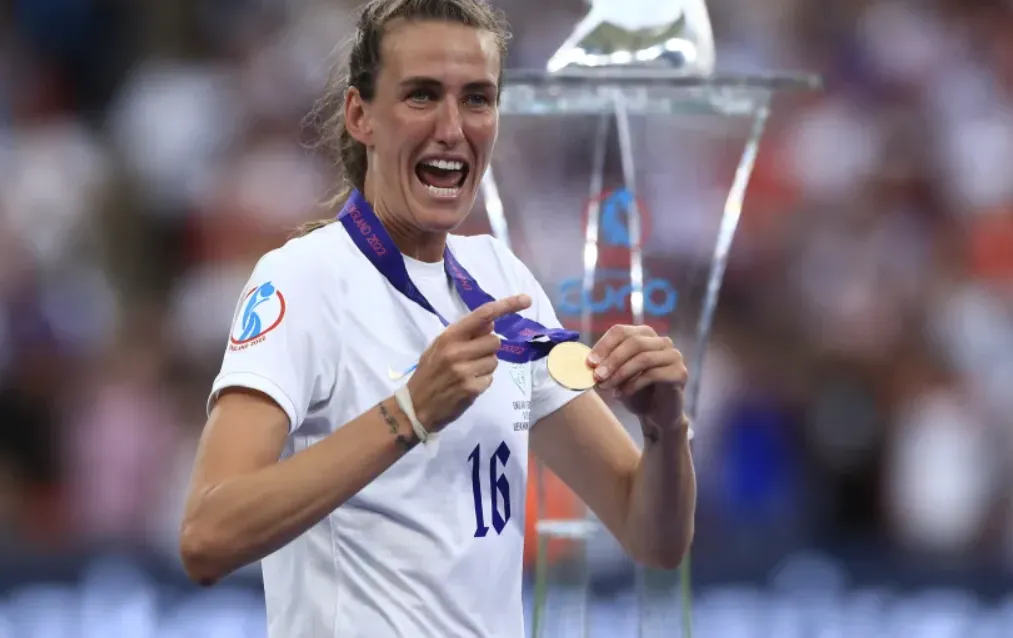
2022: The Ultimate Triumph – At the age of 35, Scott lifted the UEFA Women’s Euro 2022 trophy. She came off the bench in the final against Germany, providing a crucial assist in extra time and then converting her penalty in the shootout. This victory was the crowning glory of her career, and she was widely praised for her professionalism and impact.
Analysis: The Tactical Impact of Her Departure
From a tactical perspective, Jill Scott’s retirement removes a unique weapon from Sarina Wiegman’s squad. While not always a starter in her final years, she was the ultimate “impact player.” When the Lionesses needed a goal or needed to change the tempo of a game, Scott was often the player summoned from the bench. She brought a physical presence that few other midfielders could match, offering both defensive security and a late-running attacking threat. Her ability to win aerial duels in the middle of the park was a crucial asset in tight games. For young players in the squad like Ella Toone and Keira Walsh, Scott was more than a teammate; she was a mentor. Her understanding of the game and her leadership in the dressing room will be incredibly difficult to replace. Six6s experts often highlight her ability to read the game as a key factor in England’s recent success. The current squad is young and talented, but they will miss her experience in high-pressure knockout games.
“Jill’s ability to come on and completely change the momentum of a game is something you cannot coach,” says Sarah Johnson, a former England international turned analyst. “She had this knack for knowing exactly when to make that late run into the box or when to just put her foot in and win the ball. It’s a type of football intelligence that develops over hundreds of games, and you can’t just plug someone in to do the same thing.”
What’s Next for Jill Scott?
Since announcing her international retirement, Scott has already ventured into the world of media, becoming a popular pundit for major broadcasters. She also confirmed she would continue playing for her club side, ensuring her competitive career is not entirely over. Her impact on the sport, however, extends far beyond her playing time. She has been an advocate for women’s football at all levels, inspiring a generation of girls to take up the sport. Her passionate and joyful approach to the game made her a fan favorite, not just in England but around the world. She has also been a businesswoman, using her profile to support various charitable causes. For fans who follow the sport on Six6s, she remains a figure to watch, even if she is no longer wearing the three lions on her chest.
Conclusion: A Legend Who Left on Her Own Terms
Jill Scott’s decision to step away from the England national team is a moment for reflection. She is a legend who did not fade away but chose to walk away at the very peak of her powers, holding the European Championship trophy high above her head. Her story is one of hard work, loyalty, and, ultimately, glorious triumph. She leaves behind a team that is younger, more dynamic, and now European champions, having played a huge part in building that winning culture. Scott’s legacy is not just in the medals she won, but in the example she set for every young footballer dreaming of playing for their country. As we look back on her 161 caps, it is clear that England has lost a player whose heart was as big as her talent. What is your favorite memory of Jill Scott in an England shirt? Share your thoughts in the comments below and let us celebrate the career of one of the greatest Lionesses.
